Fluffy Appam & Creamy Vegetable Stew: The Ultimate Healthy Indian Breakfast
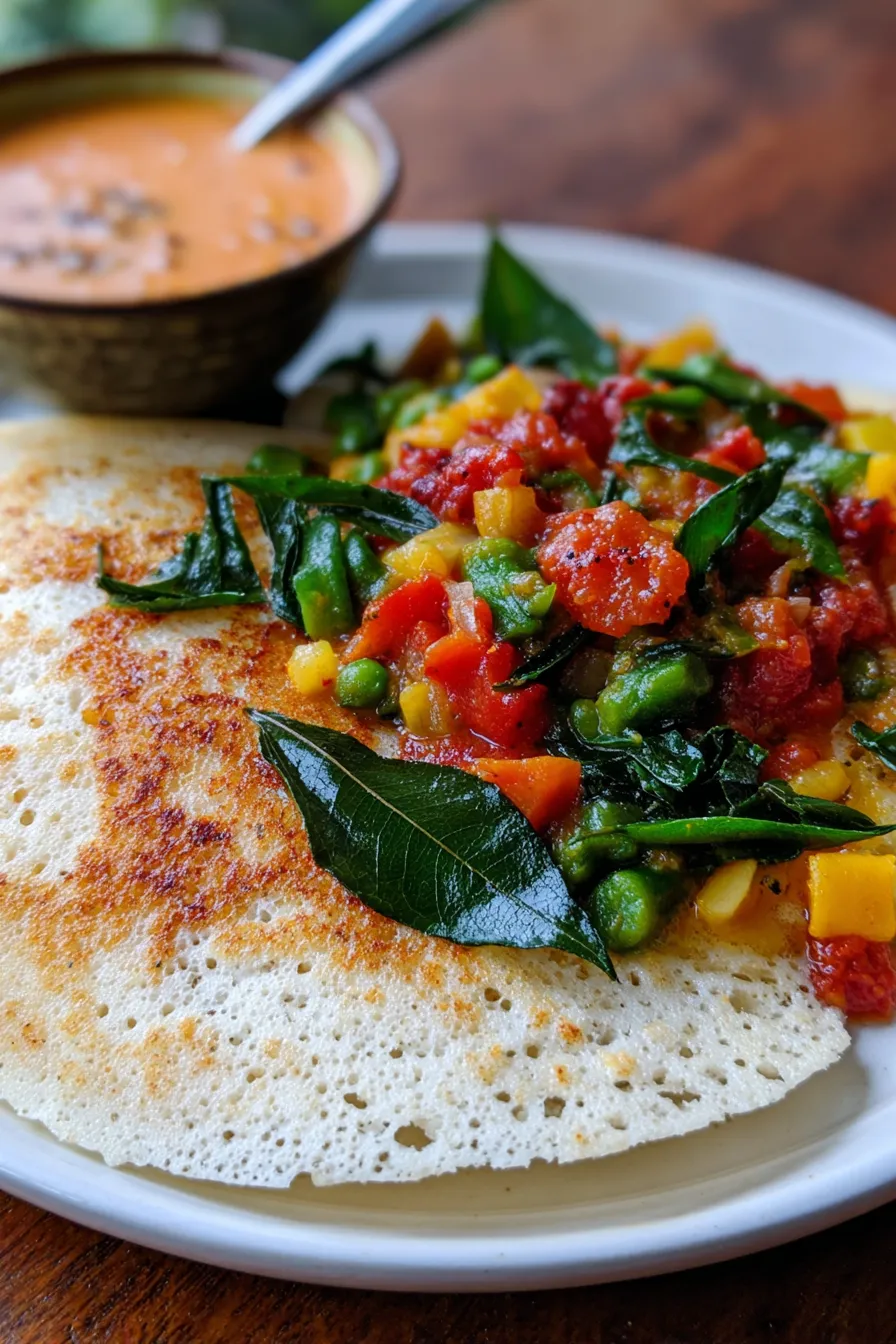
Ah, the aroma of a lazy Sunday morning, wafting from my grandmother’s kitchen! It always meant one thing: a fresh batch of Traditional Appam with Stew Indian Recipes | Healthy Breakfast was on its way. The delicate, lace-edged pancakes, served alongside a warm, fragrant vegetable stew, were more than just a meal; they were a hug in a bowl, a cherished memory.
This tested family favorite recipe for appam and stew brings me right back to those joyful, comforting moments. It’s the kind of wholesome, easy breakfast or even a light dinner that warms you from the inside out. Get ready to create new, delicious memories in your own kitchen.
This isn’t just a recipe; it’s an invitation to experience the authentic flavors of South India, perfect for a slow weekend morning or whenever you crave truly satisfying comfort food.
Why You’ll Love This Recipe
- ❤️ Authentic Flavor Profile: Experience the true taste of Kerala with light, lace-edged appam and a subtly spiced, creamy vegetable stew. It’s a culinary journey in every bite that transports you to the serene backwaters.
- Healthy & Wholesome: Packed with fresh, vibrant vegetables and made with fermented rice batter, this dish is not only incredibly delicious but also nutritious. It’s a perfect guilt-free start to your day or a light, satisfying meal.
- Comfort Food at its Best: There’s something profoundly comforting about a warm appam paired with a hearty, aromatic stew. It’s the ultimate comfort food, especially on a chilly morning, a relaxing evening, or when you simply need a little culinary hug.
- Surprisingly Easy to Make: While it sounds exotic, making appam and stew is quite straightforward with our detailed, easy-to-follow instructions. You’ll be surprised how quickly you master this delightful dish and add it to your regular rotation.
- Naturally Gluten-Free: Appam batter is made primarily from rice, making this entire meal naturally gluten-free! This is fantastic news for anyone with gluten sensitivities looking for flavorful, satisfying options.
- Easily Vegan-Friendly: The traditional stew recipe uses coconut milk, making it inherently vegan. Just ensure your appam batter is dairy-free (most are), and you have a fantastic plant-based meal ready to enjoy.
- Versatile Serving Options: Ideal for breakfast, brunch, or even a light, wholesome dinner. This dish pairs beautifully with an array of chutneys or even a simple sambar if you want to expand your Indian meal experience further.
- Make Ahead Friendly: The appam batter can be prepared in advance, allowing for convenient overnight fermentation. The stew also holds up wonderfully and can be made a day ahead, significantly easing meal prep for busy mornings.
- Impress Your Guests: This dish is a showstopper! Its unique texture, exquisite flavors, and vibrant presentation are sure to impress family and friends alike, making you the star of any gathering or potluck.
- Delightful Texture Contrast: The soft, spongy center and exquisitely crispy, delicate edges of the appam provide a delightful textural contrast. This unique quality perfectly complements the smooth, creamy, and flavorful vegetable stew, creating a truly memorable eating experience.
What You Need
You only need a few simple pantry staples and fresh vegetables for this incredibly satisfying appam and stew recipe! Check the full printable recipe card below for detailed measurements and a complete list of ingredients.
Expert Tips
- 💡 Perfecting the Appam Batter Fermentation:
- The absolute secret to fluffy, airy appam lies in proper fermentation. Ensure your rice and coconut mixture is left in a warm place (ideally 75-85°F or 24-30°C) for 8-12 hours, or until it’s visibly bubbly and has a slightly sour aroma.
- If your kitchen is on the colder side, you can place the batter in a slightly warm oven (turned off, but preheated briefly and then turned off) or near a sunny window to encourage yeast activity.
- A pinch of active dry yeast or a tablespoon of cooked rice (which acts as a natural starter) can significantly help kickstart the fermentation process if you’re struggling to get enough bubbles.
- Achieving the Signature Appam Shape:
- Use a well-seasoned non-stick appam pan (appa chatti) or a small, deep cast-iron frying pan for the best results. The shape and depth of the pan are key.
- Heat the pan thoroughly over medium-high heat, then lightly grease it with a few drops of oil. Pour a ladleful of batter directly into the center.
- Immediately swirl the pan in a circular motion to spread the batter thinly around the edges, creating the delicate, lace-like pattern. Leave a thicker pool of batter in the center.
- Cover the pan with a lid and cook on medium heat for 2-3 minutes, or until the edges are crispy and golden, and the center is soft, spongy, and cooked through.
- Consistency is Key for Stew:
- The vegetable stew should have a creamy and slightly thick consistency, never watery. If it’s too thin after cooking, simmer it uncovered for a bit longer to reduce. If it becomes too thick, simply add a splash of warm coconut milk or water to reach your desired consistency.
- Always use good quality, thick coconut milk (the first extract if using homemade) for the stew to ensure that rich, velvety texture and authentic flavor.
- Freshly Ground Spices for Aroma:
- Whenever possible, lightly toast and then grind your whole spices (such as cardamom, cloves, and cinnamon) just before adding them to the stew. This simple step unlocks their full aromatic potential and adds an incredible depth of flavor that pre-ground spices simply can’t match.
- Even a quick bash in a mortar and pestle is better than using stale, pre-ground spices for enhancing the final taste of your stew.
- Tempering (Tadka) for Maximum Flavor:
- Do not skip the final tempering (known as tadka or seasoning)! Heating oil or ghee with mustard seeds, fresh curry leaves, and dried chilies and pouring it over the finished stew is a crucial step.
- This process infuses the stew with a fresh, vibrant aroma and a burst of flavor that elevates it from good to absolutely divine, making it truly authentic.
- Serving Temperature Matters:
- Appams are undeniably best when served immediately, warm and fresh off the pan, to fully enjoy their soft, spongy center and delicate, crispy edges.
- The stew can be gently reheated; however, avoid boiling it vigorously after adding the final coconut milk to prevent it from curdling and losing its smooth texture.
- Ingredient Quality for Best Results:
- Always use fresh, high-quality vegetables for the stew. This makes a noticeable difference in both the taste and texture of the final dish.
- For the appam batter, using good quality raw rice or idli rice will yield the best fermentation and the most desirable texture for your appams.
Variations & Substitutions
- Vegan/Dairy-Free: The traditional vegetable stew recipe relies on coconut milk, making it naturally vegan. Just ensure your appam batter doesn’t include any dairy products (most traditional recipes are water-based after fermentation).
- Gluten-Free: Fantastic news! Appam, being primarily made from rice, is inherently gluten-free. This makes it a wonderful and safe option for those with gluten sensitivities or celiac disease.
- Protein Boost: Easily add extra protein to your meal by stirring in cubes of pan-fried paneer, firm tofu, or even hard-boiled eggs into your vegetable stew. Add them during the last 5-10 minutes of cooking to warm through without overcooking.
- Adjust Spice Level: You have full control over the heat! Adjust the number of green chilies in the stew to match your preference. For less heat, deseed them or use fewer; for more spice, add a tiny pinch of red chili powder or a couple of extra chilies.
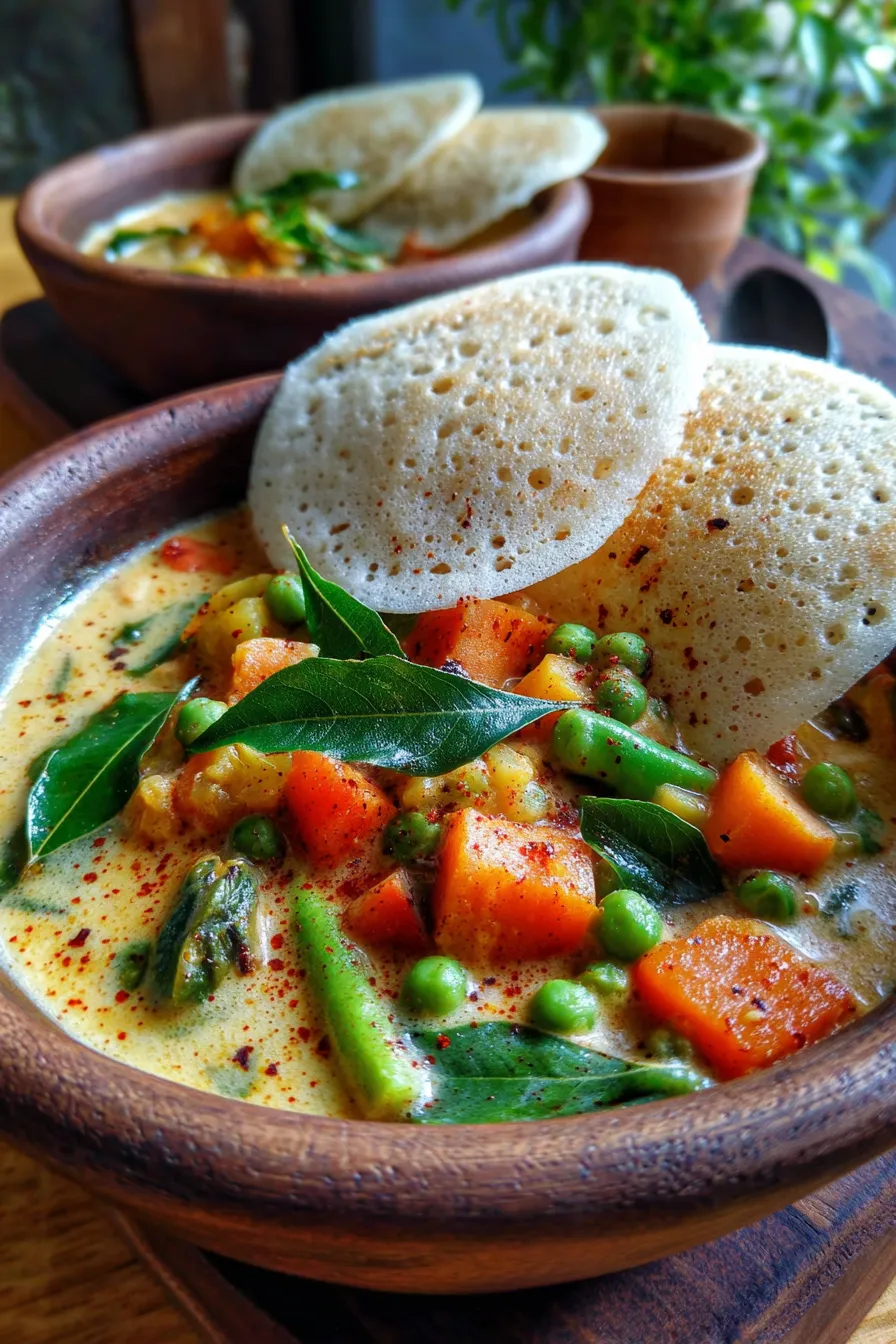
- Vegetable Medley: Feel free to experiment with other vegetables in your stew based on what’s in season or what you love. Traditional choices include green beans, potatoes, carrots, and peas, but mushrooms, bell peppers, or even sweet potatoes can also work beautifully.
Storage & Freezing
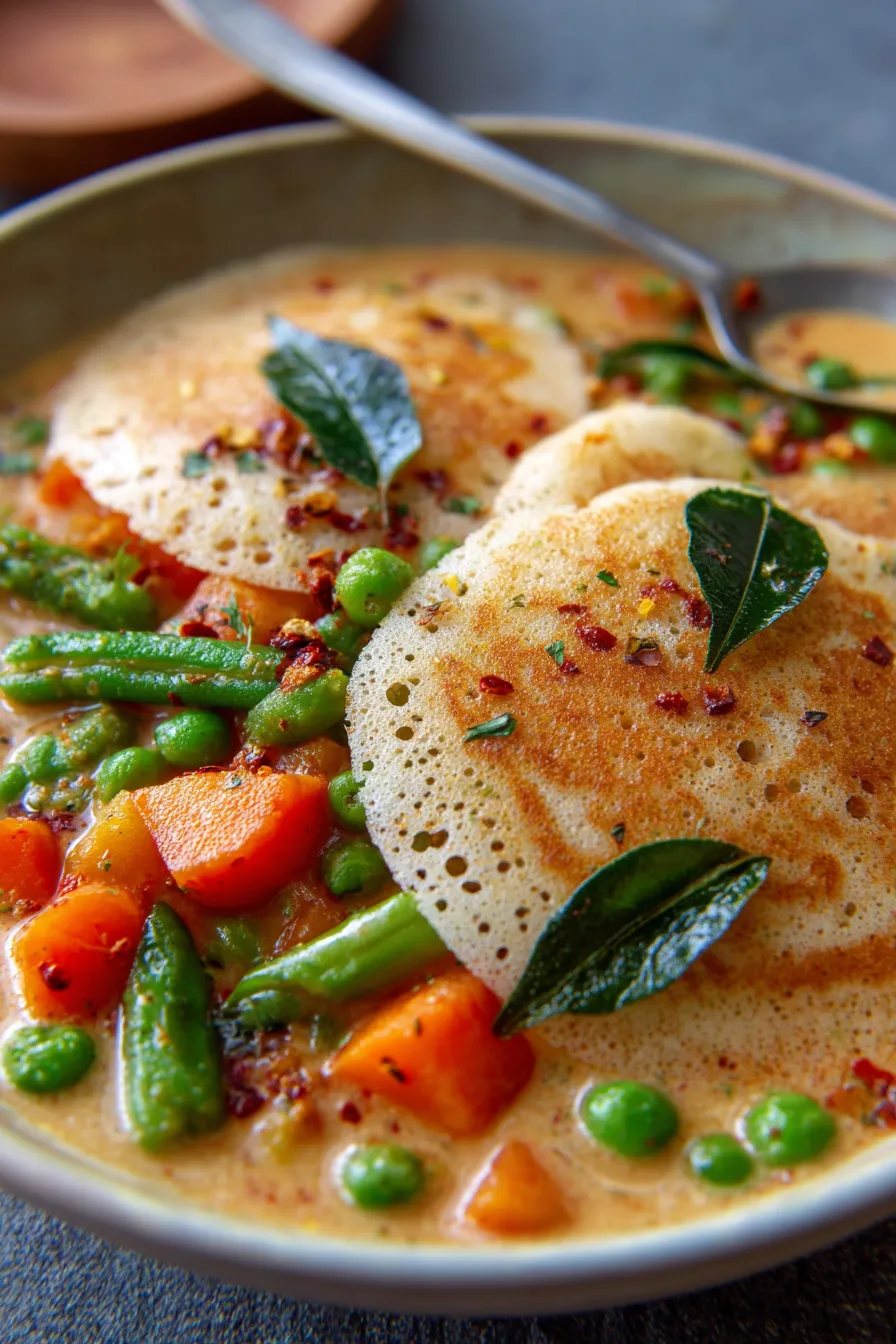
- Appam: Freshly made appams are always best to enjoy their unique texture. However, any leftovers can be stored in an airtight container at room temperature for up to 1 day, or refrigerated for 2-3 days. Reheat them gently on a dry pan over low heat or in the microwave for a few seconds; they might lose a tiny bit of their original crispiness but will still be delicious.
- Stew: The vegetable stew keeps wonderfully! Store it in an airtight container in the refrigerator for up to 3-4 days. When reheating, do so gently on the stovetop, adding a splash of water or coconut milk if needed to adjust the consistency. For longer storage, the stew can be frozen in freezer-safe containers for up to 2-3 months. Thaw it overnight in the refrigerator before gently reheating.
FAQ
Q: What exactly is Appam?
Appam is a beloved type of South Indian pancake or crêpe, traditionally made with a fermented batter of rice and coconut milk. It’s instantly recognizable by its distinctive lace-like, crispy edges and a soft, airy, spongy center. It’s a staple breakfast or light dinner item, particularly popular in the Indian states of Kerala and Tamil Nadu.
Q: Can I prepare the Appam batter in advance?
Absolutely, and it’s highly recommended! The batter actually needs to ferment, so preparing it ahead of time is an essential part of the process. You can easily make the batter the night before and let it ferment overnight. Once fermented, it can be stored in an airtight container in the refrigerator for up to 2-3 days, though fresh batter generally yields the best results.
Q: What kind of stew typically accompanies Appam?
Appam is most traditionally served with a mild, creamy vegetable stew, often known as “Ishtu” in Kerala, or sometimes with a chicken or mutton stew. The stew typically features rich coconut milk, gentle spices, and a medley of vegetables like carrots, potatoes, and peas, providing a delicate and flavorful contrast to the appam.
Q: Is this Traditional Appam and Stew recipe spicy?
Traditional Appam and Stew are generally known for their mild and comforting flavors, rather than intense heat. The primary source of heat in the stew comes from green chilies, which you can easily adjust to your personal preference. It’s designed to be flavorful and soothing, not overwhelmingly hot, allowing the natural sweetness of the coconut milk and vegetables to truly shine.
Conclusion
And there you have it! A taste of South Indian sunshine, right in your own kitchen. This Traditional Appam with Stew recipe is more than just food; it’s a delightful experience that brings warmth and comfort to any meal. Whether it’s a bustling breakfast or a cozy dinner, this dish is sure to become a cherished family favorite. Don’t forget to Pin this for later, share it with your loved ones, and most importantly, enjoy every single fluffy, creamy bite!
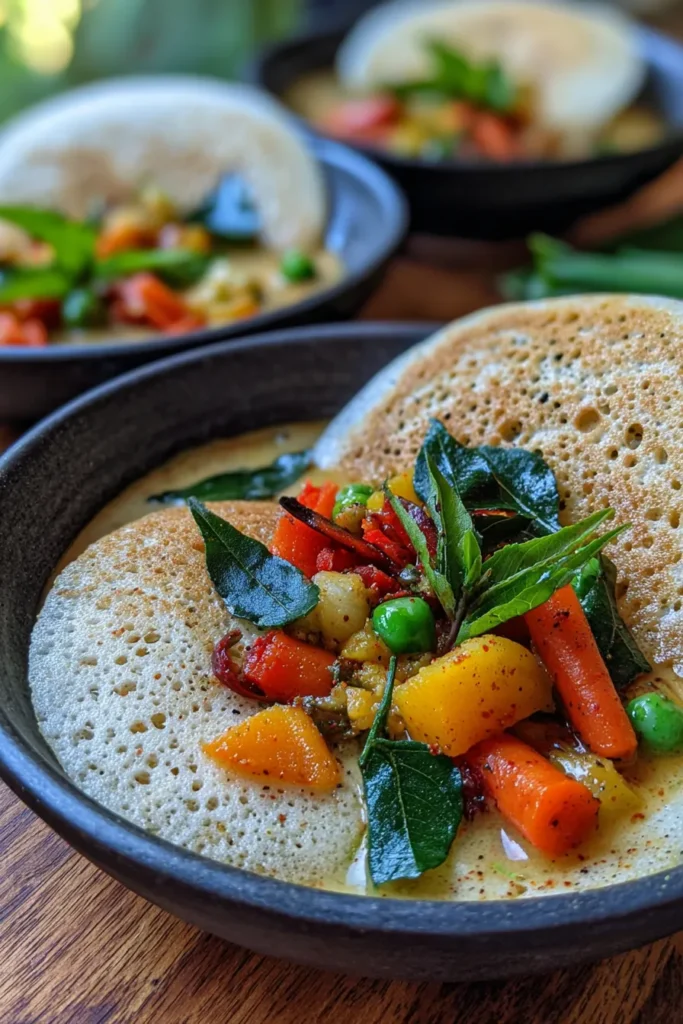
Fluffy Appam & Creamy Veg Stew: Healthy Indian Breakfast
Ingredients
- 2 cups raw rice (idli rice or parboiled rice)
- 1/2 cup grated fresh coconut
- 1/4 cup cooked rice (optional, for softer appam)
- 1 tsp dry yeast
- 1 tbsp sugar
- 1 tsp salt
- Water, as needed
- For the Stew:
- 1 tbsp coconut oil
- 1 tsp mustard seeds
- 1 sprig curry leaves
- 2-3 green chilies, slit
- 1 inch ginger, thinly sliced
- 1 onion, thinly sliced
- 2 carrots, diced
- 2 potatoes, diced
- 1/2 cup green peas
- 1/2 tsp black pepper powder
- 1/2 tsp garam masala (optional)
- 2 cups thick coconut milk
- Salt to taste
Instructions
- Step 1 For Appam Batter: Soak rice for 4-6 hours. Drain and grind with grated coconut, cooked rice, sugar, and enough water to a smooth batter. Mix yeast with a little warm water and sugar, let it activate for 5 mins, then add to the batter. Add salt and mix well. Cover and let it ferment in a warm place for 8-12 hours until bubbly.
- Step 2 For Vegetable Stew: Heat coconut oil in a pot. Add mustard seeds and let them splutter. Add curry leaves, green chilies, ginger, and sliced onion. Sautu00e9 until onion is translucent.
- Step 3 Add diced carrots, potatoes, and green peas. Add salt, black pepper powder, and garam masala (if using). Add 1 cup of water, cover, and cook until vegetables are tender.
- Step 4 Once vegetables are cooked, pour in the thick coconut milk. Gently heat through without boiling. Check for seasoning and adjust if needed.
- Step 5 To make Appam: Heat an appam pan (appa chatti) on medium-high heat. Lightly grease. Pour a ladleful of fermented batter into the center. Swirl the pan to spread the batter thinly around the edges, leaving a thicker center. Cover and cook for 2-3 minutes until edges are crispy and center is cooked.
- Step 6 Serve hot appams immediately with the creamy vegetable stew.